Did you know that?
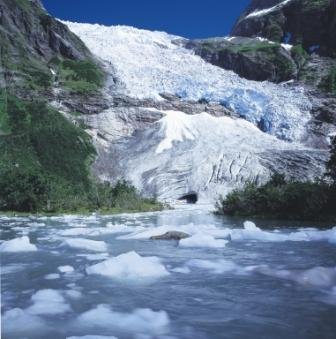
Bøyabreen 1997. Photo: Finn Loftesnes.
… 70% of all fresh water on Earth exists as snow and ice?
90% of this is stored in Antarctica and 9% in Greenland. Less than one percent of fresh water is found in lakes and rivers! There are 1,400 million km3 of water on Earth, but fresh water only makes up 2.5% of this, the rest is salt water.
Norway is the country in Europe that has the most glaciers, and thus stores the most water. In the world, Antarctica stores the most water in the form of ice. If the ice on land melts, it will lead to an increase in sea level. For example, melting of the ice on Antarctica can lead to about 60 m higher sea level, and a melting Greenland ice sheet can increase sea level by 7 m.

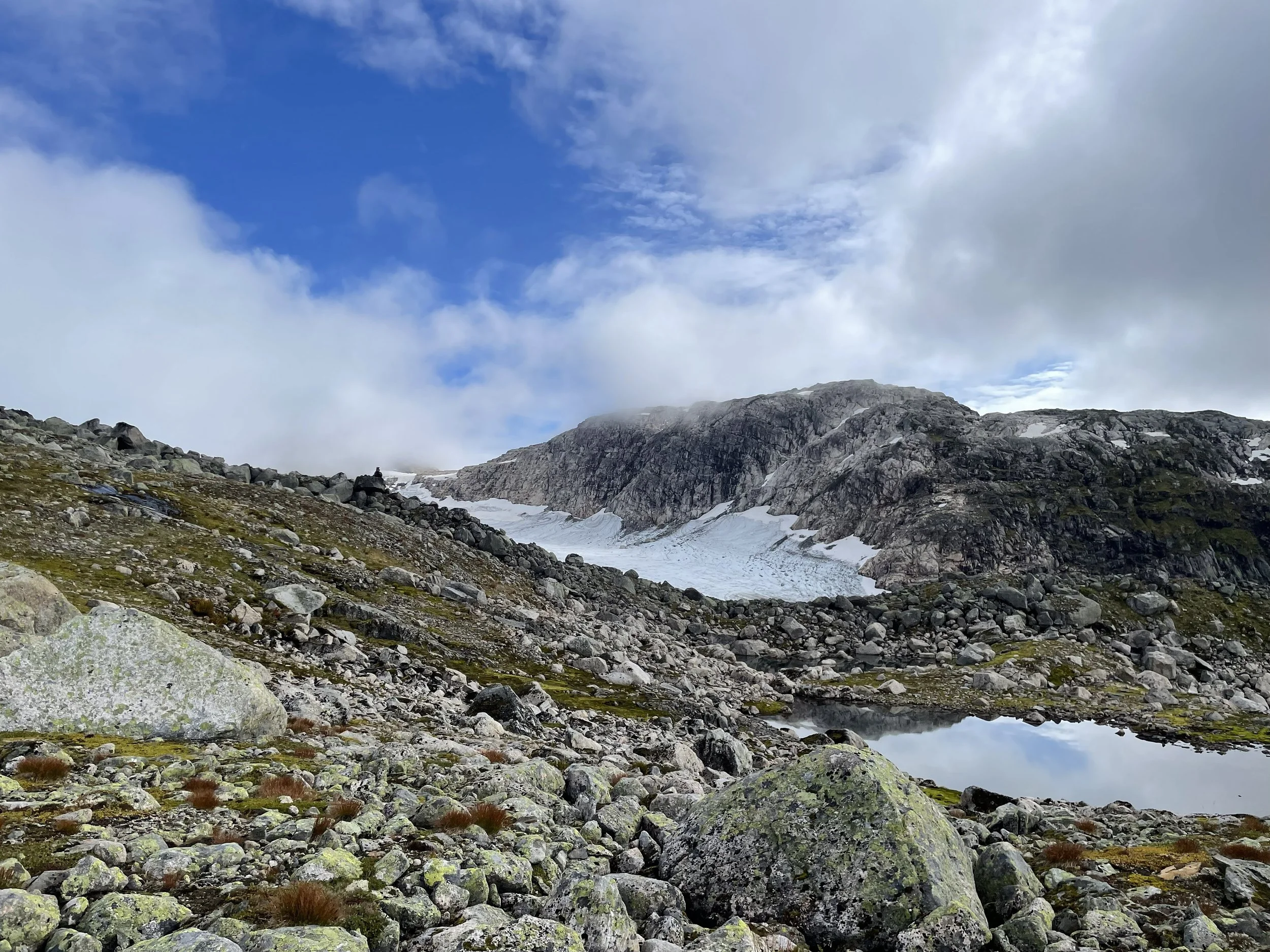
Supphellebreen 2010. Photo: Torunn Bøe.
… The Jostedalsbreen Glacier is not a remnant from the last ice age?
Scientists believe that the entire Jostedalsbreen Glacier was gone for a period of about 3,000 years. This happened about 8,000 to 5,000 years ago. At that time, the climate was warmer than today. This period is called the Atlantic. Afterwards, the climate became colder again and the glacier formed again.

Vetle Bøyabreen 2014. Photo: Pål Hage Kielland.
...there are around 6,000 glaciers in Norway?
The total area they cover is 2328 km2, with 1400 km2 in southern Norway and 928 km2 in northern Norway
There are 2,128 glaciers in Svalbard, covering an area of 36,591 km2.

Bøyabreen 2014. Photo: Pål Hage Kielland.
… Jostedalsbreen is the largest glacier on the European mainland?
The Jostedalsbreen Glacier covers an area of 458 km2 and is about 60 km long. In several places the ice layer is over 600 m thick, such as under the Tunsbergdalsbreen and Nigardsbreen glaciers.
The ice mass of Jostedalsbreen is equivalent to about 300,000 million bathtubs of water, the entire water supply of Norway for 100 years. More information can be found on the Jostedalsbreen National Park page.
…ice ages have had different names depending on where in the world you are?
The last Ice Age is known in Northern Europe as the Weichel, while in the Alps it is called the Würm, in North America the Wisconsin, and in the United Kingdom the Devensian.
Although these names refer to the same general time period – which began around 115,000 years ago and ended around 11,700 years ago – the local names are used because the ice sheet developed and behaved slightly differently in the different regions. The names are usually taken from places where geologists first found clear traces (terminal moraines and deposits) after the maximum extent of the ice.